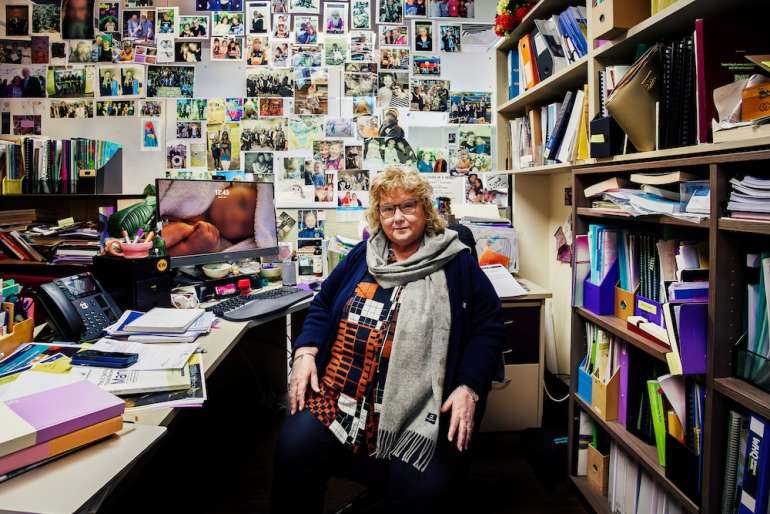
Image source: brisbaneportraitprize.org
When Karyn Walsh first arrived in South Brisbane in the 1980s, she remembers people sleeping around St Mary’s Catholic Church, in nearby car parks, and behind the presbytery. More than 40 years later, rough sleepers are still gathering around the same parts of South Brisbane while housing costs across the city continue rising.
Walsh recently announced her retirement from Micah Projects after decades working across homelessness, housing, youth services, and community advocacy in Brisbane. Her reflections on the current housing situation highlight a reality many community organisations are already seeing every day. Homelessness is not disappearing. In many cases, it is becoming harder for people to regain stability once they fall into housing insecurity.
One of the strongest points Walsh raised was how rising prosperity can also displace vulnerable people. She recalled buying a home in West End for around $50,000 decades ago. Today, the suburb’s median prices sit well above a million dollars while rough sleepers continue living nearby in parks and public spaces.
For people already experiencing financial stress, mental health challenges, disability, domestic violence, family breakdown, or unstable housing, the situation becomes even harder when rental costs continue increasing across Brisbane.
Services across the sector are also feeling the strain. Demand for housing support, crisis accommodation, psychosocial support, and community outreach continues growing while affordable housing options remain limited.
Walsh spoke openly about how homelessness has changed over time. Earlier in her career, homelessness was often associated with older men experiencing long term alcohol dependency. Over the years, services began seeing increasing numbers of young people, women escaping violence, families, and people experiencing complex mental health or social challenges entering homelessness pathways.
For many people, homelessness does not begin with sleeping rough. It often begins earlier through housing insecurity, unstable family situations, financial strain, or untreated mental health concerns. In some cases, people leave hospital care or unstable living environments without enough long term support or community connection to help them maintain stability.
That is why long term support services matter beyond immediate crisis response. Stable accommodation, consistent support workers, psychosocial support, and reliable community connection can help people maintain stability before situations escalate further.
Walsh also reflected on how difficult it can be to create long term change through systems alone. She described years of advocacy, inquiries, and government negotiations, but repeatedly returned to the importance of listening to people who live these experiences every day.
Even after retiring from Micah Projects, Walsh said she does not plan to stop advocating entirely. One of her final reflections was that services and governments need to focus more seriously on building responses that reduce homelessness rather than simply responding once people reach crisis point.
Across Brisbane, more services are now seeing homelessness linked to mental health, housing instability, hospital discharge, and social isolation rather than a single crisis event. For organisations working across housing and community support, the challenge is no longer temporary demand. It is how to create enough long-term stability before more people fall through the gaps.